 Donate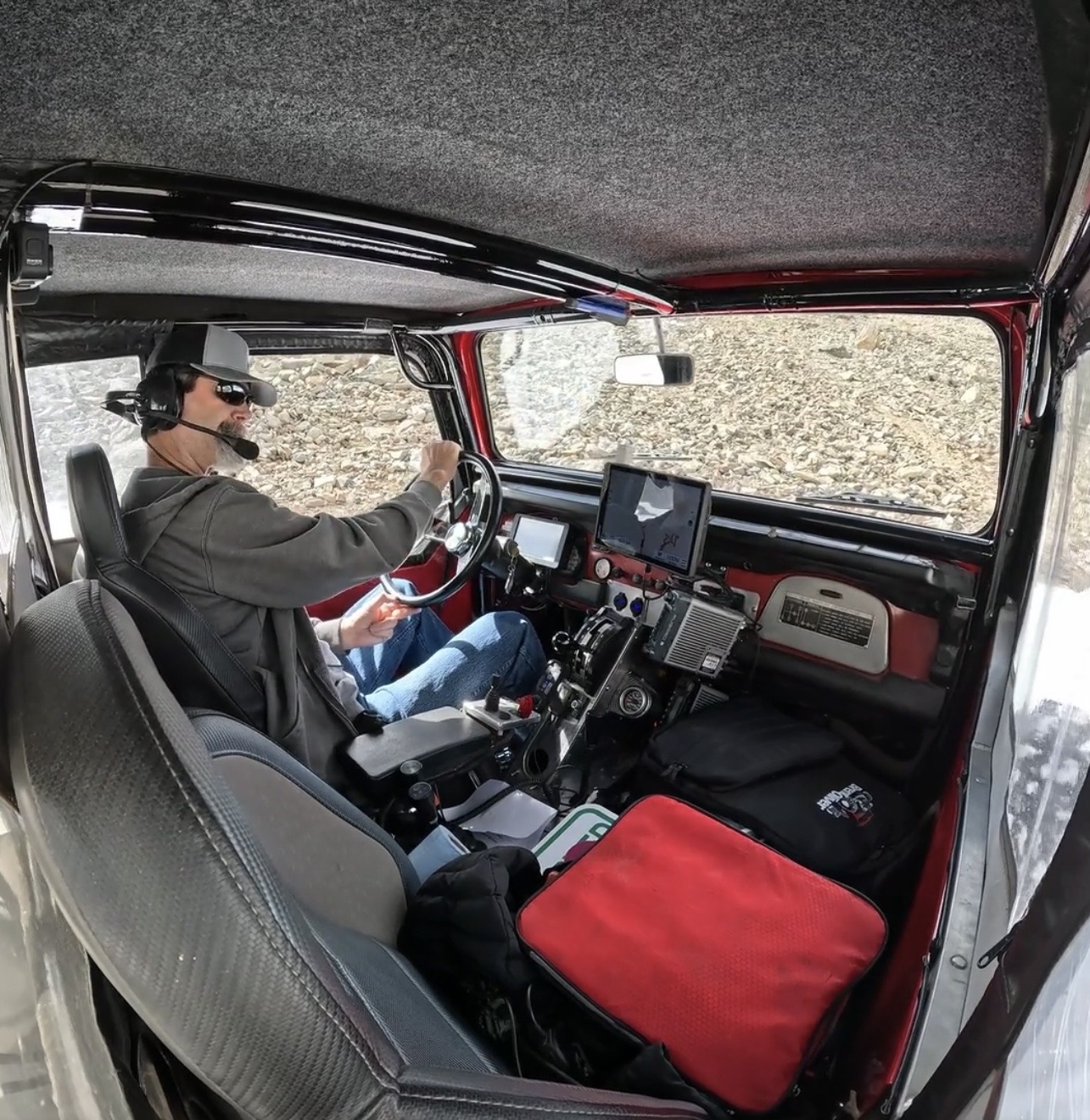
Outdoor access and human possibility
World Record
in Colorado
A journey defined by hope, endurance, and refusing to surrender to a prognosis.
The evidence
The Record Was Never the Destination
The world record was never the destination. It was the evidence.
When I was told in 2018 that my spinal cord was actively deteriorating and would eventually become terminal, I could have accepted that my world would continue growing smaller. Instead, I made a decision that would shape the rest of my life. If my spinal cord was going to continue failing, it was going to fail while I was pursuing everything I was still capable of accomplishing.
I wasn’t interested in proving anyone wrong. I wanted to discover what was still possible.
The ascent
13,185 Feet
That decision led me to one of the most demanding winter mountain objectives I could responsibly pursue. Mosquito Pass is the highest navigable mountain pass in North America, with a summit elevation of 13,185 feet. In 2025, I went up on a scouting mission and stopped 185 feet short of the summit.
On May 24, 2026, I completed a solo, unassisted ascent and descent of Mosquito Pass in Colorado in a wheeled vehicle under winter conditions. I started at 9:34 a.m., reached the summit, took a few pictures, and was back at the bottom at 10:14 a.m.
The attempt was carefully planned, thoroughly documented, and completed under specific criteria that may ultimately qualify for multiple world records once the independent verification process is complete. Whether those records are ultimately certified or not does not change what happened that day. The mountain was climbed. The objective was completed. The evidence exists.
What the mountain represents
A Prognosis Is Not a Future
The significance of that accomplishment has very little to do with a mountain. It has everything to do with what the mountain represents. For decades, medicine has understandably focused on what catastrophic spinal cord injuries take away. My journey asks a different question: What still remains? How much can determination, preparation, modern technology, faith, and the human spirit accomplish after a life-changing injury? Those questions are no longer philosophical. They are measurable.
Today, my recovery and long-term function are being evaluated by physicians at Providence St. Luke’s Rehabilitation Medical Center in Spokane, Washington, as a potential N-of-1 case because aspects of my survival and current abilities appear to be extraordinarily uncommon.
I hope that research helps medicine better understand what may still be possible for future patients, but regardless of where that research leads, one truth has already become clear to me.
A prognosis describes probability. It does not define a person’s future.
Faith and the human spirit
Faith Is Having the Courage to Step Out of the Boat.
Perspective matters. As of 2026, more than 8,000 people have successfully reached the summit of Mount Everest. Fewer than 30 people have descended to Challenger Deep, the deepest known point on Earth. The Bible records two people walking on water, Jesus Christ and Peter. Peter stepped out of the boat in faith and walked toward Jesus until he allowed fear to replace his faith and began to sink. That story has always reminded me that faith is not the absence of storms. Faith is having the courage to step out of the boat when every logical reason says you should stay where it feels safe.
The reason I did not sink that day, unlike Peter, was because I had faith. Faith. Faith combined with the human spirit. In my life, that combination has proven insurmountable against the odds. Life has not defeated me because I have not allowed it.
Meaningful access
That Is Called Dignity
This also proves the importance of meaningful access to life and the outdoors. There is no way I am going to walk to the top of Mosquito Pass. But there was a way for me to do it. Still set a record. Independently. On my own. That is something you cannot sell or buy. That is called dignity.
Despite extensive searching, I have found no documented record of anyone, disabled or able-bodied, completing a solo, unassisted ascent and descent of Mosquito Pass in a wheeled vehicle under winter conditions. We believe this was the first time it has ever been done.
What makes it profound is that I did it as an incomplete quadriplegic with a permanent airway, living with only approximately 30 percent of my spinal cord still functional, after surviving punctured lungs, a severed trachea, a severed esophagus, a C3-C5 spinal cord injury, multiple clinical deaths, and a spinal cord that was deteriorating and would eventually become terminal, all while remaining free of ventilator dependence and reaching the 13,185-foot summit without supplemental oxygen.
That combination is a medical anomaly. High cervical incomplete injuries of this severity frequently leave people dependent on mechanical ventilation for life. Remaining free of a ventilator for decades after such an injury, then driving a wheeled vehicle solo and unassisted over the highest navigable pass in North America in the snow, at altitude, without oxygen, is something that physically should not be possible. That is what makes this journey extraordinary.
Refusing the definition
Still Moving Forward
Early after my injury, I refused to accept the prognosis or the diagnosis that was handed to me. I pushed it aside and refused to live inside it. I compared myself to the people around me and demanded more from myself than anyone expected. That decision shaped everything that followed.
After the original injury, everything I have done in life has been with approximately 30 percent of my spinal cord still living. When even a small portion of that remaining cord dies, a large portion of my function goes away. If a man with all of that can still dictate his own life and live it to the fullest, without needing a ventilator, then others can too.
I have not slowed down. I am still moving forward. There are future world records already in the works. There are more mountains, more challenges, and more proof still to come. I will continue proving what is possible until the day I am called home to be with my son.
The lesson
People Should Never Surrender Their Future Because Someone Else Believes They Know How the Story Ends.
This journey was never about proving that I could climb a mountain. It was about proving that people should never surrender their future simply because someone else believes they already know how the story ends.
That lesson reaches far beyond my own life. Every day, people are told what they will never do again. Some are living with spinal cord injuries. Others face multiple sclerosis, cerebral palsy, traumatic brain injuries, cancer, PTSD, or countless other life-changing diagnoses. Every one of them deserves the opportunity to discover what remains possible before accepting unnecessary limitations.
The foundation’s work
Opportunity Changes Lives
That belief is also the foundation of the Brent Oliver 541 Foundation. The same mission that drove me to the mountain drives every project we undertake. We work to provide meaningful access to life and the outdoors because opportunity changes lives.
Modern adaptive technology has rewritten what is possible for people living with disabilities. Adaptive mobility equipment, specialized vehicles, power chairs, and other innovations now allow people to experience places that previous generations could never have reached. Our responsibility is not to lower the standard of the outdoors. It is to remove unnecessary barriers so people have a fair opportunity to experience it.
When access is denied or treated as optional, civil rights become part of the conversation. Section 504 of the Rehabilitation Act and related laws exist because equal opportunity is not a convenience. It is a right. Meaningful access is not created by an invitation alone. It is created by removing the physical barriers that stop a person from participating with independence and dignity.
There was no path for me to walk to the summit of Mosquito Pass. There was a path for me to reach it in a wheeled vehicle under my own control. That difference is everything. That difference is dignity. That difference is what the Foundation fights for every day.
The mountain proved one person’s possibilities. The Foundation exists to help thousands of others discover their own.
What comes next
The Work Is Not Finished
There are more mountains to climb, more questions to answer, more potential world records to pursue, and more barriers to remove. Every future expedition will continue serving the same purpose it always has: to demonstrate what is possible, to encourage those who have lost hope, and to remind the world that meaningful access to life and the outdoors begins with believing that a diagnosis is not the final chapter.
Human potential is never fully known until a person is challenged and something deeper is unlocked. Most people have no idea how deep they can dig. When you think life is over and you cannot go any farther, there is an entire set of gears you have never used. Life is never over. There is always a path forward.
Whatever the outcome, not getting the return on the life you want is never from lack of effort. It is because the effort was not put in the correct way for enough of it to succeed.
My story has never been about a mountain. It has always been about possibility.
Help move the mission forward
Support Meaningful Access
Your support helps the foundation remove barriers and create opportunities for people who cannot do it alone.